Tuesday, 21 April 2015

Whats new for Chelsea 2015 - First plant!

Its that time of year again when thoughts are heading towards the greatest flower show. Chelsea 2015 is fast approaching so what wonderful new introductions are we bringing to the party?
For the last 3 years we have made it our policy to only launch UK bred plant material and this still holds. It has to be said we have been offered some very interesting new plants from worldwide sources but have had to say no.
So what have we got to offer you?
Here we go I will start with Rhemannia Walbertons "Magic Dragon"
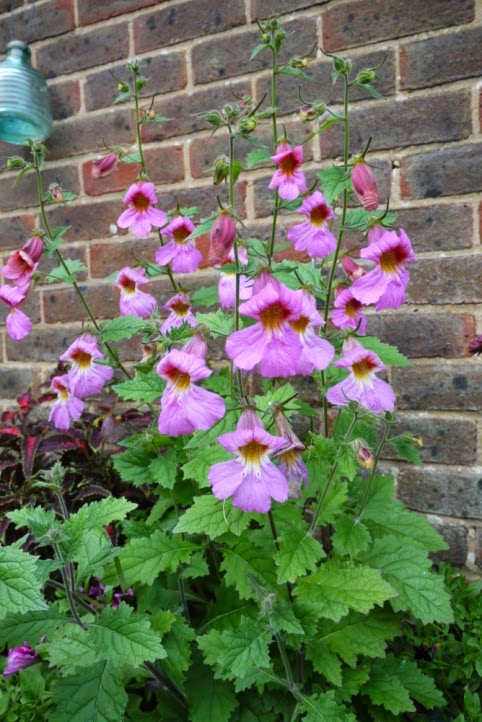

A world first Rhemannia elata x Rhemannia glutinosa

Rhemannia elata in this case the epithet elata means tall. They have hairy stems and leaves with tall spikes of large pink flowers with a yellow throat. This variety is easily grown from seed and can be variable. The common name of Chinese Foxglove is as usual with common names misleading as they are not related to Digitalis, it is due to their appearance and the fact that the plants originate from China.

Rhemannia glutinosa a much shorter growing variety with very hairy stems and leaves which is has a higher hardiness rating. The flower colour is more a dusky orange/red.


The wonderful thing about having parents with these characteristics is that the subsequent offspring have been chosen for a combination of parental characteristics. 
Rhemannia " Walbertons Dragon" is very free flowering producing numerous stems per plant over a very long flowering period from May until the first frosts. With a neat tidy habit and very large dark pink flowers a favourite of the bees, giving great garden performance. 
This will be a great addition to any garden for sun or part shade in any reasonable soil. For those who love to grow something different in containers this will also be ideal giving so much pleasure throughout the summer. Occasional dead-heading will be necessary and liquid feeding recommended for growing in a container.


Friday, 2 January 2015

Behind the scenes Natural History Museum contd...


contd
After the wonders of the frozen specimens we moved to the area of a much older technique of storing plant material which is still used today, pressed plant material. The herbarium specimens ranged in age but were all impressive, especially with all the historical persons with whom each had connections.

Before we get there however we need to use the lift.....
Not once but twice someone being a gentlemen allows the others to get in the lift, only for when he gets in for the lift to say overloaded....


It will not stop him eating cake at the shows tho

Here we go the herbarium 


I'm not even going to list all the names on display, just lets be honest and say we were all in awe...


Just when you think you have seen some memorable items it seems to get better.
How about samples from the first voyage of the Beagle, collected by Banks and Solander.

This is the first collected sample and also identified Banksia....such an iconic plant.

Other samples do not have such a good story for this one apparently is now extinct


Other material we saw had its significance, newer subjects pressed and labelled in the same way as older subjects.
We still use this form of herbarium  specimens today. 
Modern technology is however starting to help with the digitising of all specimens in the herbarium it will take years. The photos of the plates is the easy bit. The deciphering of the field notes is the bit that takes a while longer, a lot of collectors were doctors!! Also not all field notes are on the front some additional information is on the reverse.


Some of the modern samples have helpful map locations.

The tour probably created more intrigue and a list of questions from all who joined us.
I for one so want to visit again.
The day would not have been the same without meeting up for a long lunch.


A fabulous day of which I have only skimmed the surface.
Great company. 
Here's to many more outings.


Tuesday, 23 December 2014

Propagation

What, when, how and why to propagate plants for your garden.
These are the questions a lot of people ask and is the purpose of the fun filled hands on propagation workshops I will be hosting here at Hardys.


Are you frightened to cut up your plants?

Do you know where to cut them off?
What is the difference between nodal, internodal, tip, root, basal cuttings?


If you want to learn more and get your hands dirty this is the course for you so go to Propagation workshop - Spring

Thursday, 18 December 2014

Behind the scenes at the Natural History Museum

 We were very lucky to meet in the summer at Waterperry gardens a lovely lady Jackie McKenzie-Dodd who works at the National History Museum she mentioned that a trip around may be possible. So a plan was put forward for a group from OldHorts who would meet up and have a behind the scenes tour. The resulting day has non stop been talk and discussed continually since.
Normally you expect to go in through the grand front entrance not us it was the side doors. So what do we think the collective noun for OldHorts should be?
Once inside poor Jackie and Justin had the unenviable task of getting us all sorted into 2 groups with all passes in place. Then making sure we did not get left behind down all the different corridors, too much to look at.


Perhaps we all felt at home?
It's quite different being taken to the working areas hidden behind those little doors that say staff only.
You move from the rich tapestry of wooden panel rooms amazing brickwork and tiled floors to the stark reality ......


Oh well what do expect there is always an upstairs /downstairs in these places nothing new....
So once we were in this area it was time to see what Jackie gets up to, and where all those dead specimens are stored for use at a later date for research. ( no Paddington is not in here)
It was time for us to get all dressed up, some make this look good others well I leave it to you to describe it....


Now we were ready to clean the floors, it was time to look at the amazing range of storage for all the samples. The lines of freezers are all named not with what you may think is inside. The names are for ease of knowing which to go to should there be a problem and also for extracting samples to send off all over the country and globe. Everything is wired to the main control board and the temperatures monitored. They can send an alarm to a mobile should there be a powercut or a breakdown. Being called at 2am by a polar bear is so much better than freezer number 00251, most of us would be motivated to answer.


The freezers have numerous drawers should there be a major catastrophe the red drawer in each are the ones to be saved first. 
Obviously gloves are required to handle the trays as you can see the temperature is low. The room temperature is also low so there is not too much temperature raising when the doors are opened.
Within the trays the samples are held inside small phials, as not a huge amount of material is required to be kept. The samples sent out are small shavings, the scientist are looking at the cellular level, so sending too much material is a waste. It does mean that this is a huge resource for the world.


But obviously collecting out in the field travelling with a large freezer is impossible so mobile options range from hi tech to simple...


The cards will only store DNA but sometimes that's all that's required.
Dry samples are the easiest to transport.
So much information to take in and we had not been to see the mega storage that is the liquid nitrogen  vats.


Behind lock doors.....


Ooh this was like being in one of those science fiction movies.....oh or just an over vivid imagination taking over...
Some amazing sample material kept in here.
Jackie gives us the full demonstration, we get to see the samples in racks that were brought back from Vietnam. Although above these were some elephant blood samples taken by someone called Sir David Attenborough?!?


Oh no it's time to go on the other half of our tour.
We want to stay, there's a robot to look at...


Thank you Jackie and Justin 😊🐝🐞🐜


Wednesday, 17 December 2014

Architectural plants good for cutting starter collection

Many people are starting to look at the plants they put into their gardens with a view to them being useful for both the garden and house. I know not everyone likes cutting the flowers from their border perennials to adorn the house, but think of it as a pruning technique to produce more flowers on the same plant. If you cut to thin out a plant you will get more flower production and therefore a longer flowering period on that plant, it also helps keep them tidy.

Penstemon digitalis "HuskersRed"


This wonderful Penstemon has long stems with white to
lilac tubular flowers in the summer months. Unlike others in this family it has rosettes of nearly evergreen basal leaves. The new leaves appear ruby red in the spring and can go dark green by the end of the season. A semi shaded area is a good place for these to grow.
This is a selected form from Nebraska and can tolerate very harsh conditions. The plant also has many other attributes, being great as a beneficial insect attractant, resistant to deer damage and drought tolerant.


Alcea ficifolia Rosea - Flower
Often referred to as the fig leaved hollyhock due to resemblance of the leaf shape. 
The hollyhocks have been grown in gardens for centuries being introduced as far back as the 16th century and are striking tall perennials or biennials for the back of a border.
The ficifolia species are truly perennial  and have the added benefit of being resistant to hollyhock rust. 
This species is from Siberia and as such are very tolerant of many conditions.


Alcea ficifolia Rosea - Leaf

For long flowering, also great stature in a border in full sun and reasonable soil, you cannot do better than this wonderful sterile thistle. It has to be one of my favourites for being such a reliable free flowering plant, producing masses of deep magenta thistle flowers throughout the season and re-blooming well after cutting back. Rivulare means growing by a stream and this plant will benefit from being grown in moister conditions. It can produce copious amounts of down, but no seed.The leaves do produce thistle spikes but they are not too sharp.

Cirsium rivulare "Atropurpureum"


The Salvia family is a large diverse group with many great plants such as this beautiful
Salvia "Eveline".
The tall elegant spikes of soft pink cover the plant in mid summer. Cutting back can induce more flowering so it is beneficial to pick these. A sunny site with free draining soil is an ideal location. The bees and butterflies love the flowers for their nectar.
This form is a hardy perennial variety for planting in mixed borders or the cutting garden.

Salvia "Eveline
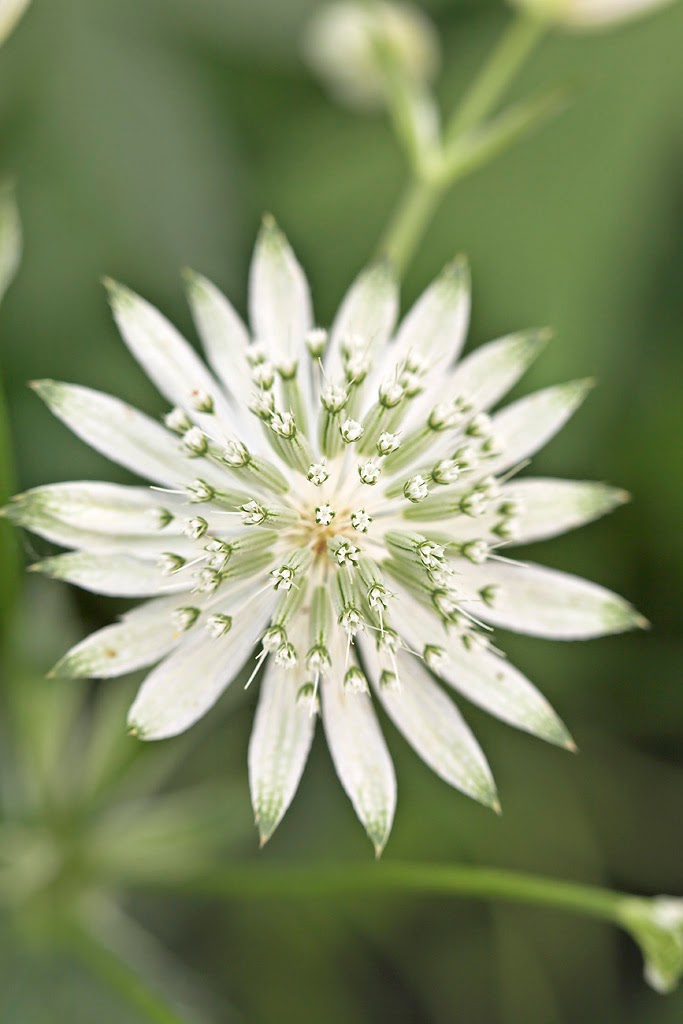
To finish off this collection of wonderful plants for stature and cutting we have an easy to grow but also extremely useful plant Astrantia major Alba.
Its name comes from the Greek for star which describes the shape of the flower, commonly know also as masterwort.
A moist humus rich soil and a semi shady position in the garden these plants will succeed happily.


Buy this collection here


Monday, 8 December 2014

Shady Ladies a collection

Planting for the shade or semi shade is one of those areas in the garden where a lot of gardeners struggle to find a good solution. Let's just start with a few good plants known as Rosy's shady lady collection.

Omphalodes cappadocica "Cherry Ingram"
A fabulous low carpeting evergreen plant for shade and tolerates drier soil conditions, it is a native of Turkey. This has wonderful bright blue flowers in spring over mat forming leaf base. The common name is Navelwort and was a favourite of Marie Antoinette. Very useful plant for ground cover under trees and shrubs. Once it is established it can be split but it does not like too much disturbance, so split after flowering. This was named for Collingwood Ingram the distinguished horticulturist famed for his breeding of Japanese Cherries.


Geranium "Ann Folkard"
Hardy geraniums what more do I need say one of the most useful plant families there is. This one is a hybrid of G.procurrens and G.psilostemon bred in Lancashire by the Rev.O.G. Folkard and named after his daughter. It has a rambling habit from a central crown and is easily kept under control by pruning back. The early leaves appear golden yellow and turn green as it matures and flowers. It is happy in any shady border, any soil, it is deciduous.
Graham Rice puts it in his top ten hardy geraniums.


Anemone "Pretty Lady Susan"
This is part of the new pretty lady series of breeding by Mr Kanazawa from Japan. Their main attribute is that they are dwarf growing and very free flowering. They start blooming earlier than other forms of autumn flowering Anemones. Excellent in part shade for the front of border or under trees.
Pretty Lady Susan is a single flowered dark pink form, I use it as replacement for A."Hadspen Abundance".


Campanula "Pink Octopus"
I am aware this does not have a women's name but it is pink and has the appearance of a bouffant dress. This campanula has dark green basal leaves and a spreading habit. It is happier in a humus rich soil in part shade. The buds look like Japanese lanterns and open with flared petals.
This was introduced by Terra Nova Nurseries in the US and Jimmy Turner Of Dallas Arboretum gives it as a recommendation for roof garden plantings.


I have always wondered about calling it octopus as it only has six petals!!


Astrantia major "Florence"
One of many new varieties that are being bred at present this one was bred in the Netherlands and introduced by future plants. Astrantia produce large clumps and this variety being sterile flowers for a much longer period through out the early summer onwards. Given a good soil, part shade they are happy in most garden situations.


Tuesday, 5 August 2014

Gaura

If you have a spare moment today please take a look at our the first of our gardening youtube series, Gaura

https://blogger.googleusercontent.com/img/b/R29vZ2xl/AVvXsEg_-ek86X3MOY1SiOmKGepv2EnOzvm8l9hojzYTjmvd7of_av_4LLV8Y5icaLVvmMtD2_B_APv-dbovJr-eV0oZPnOlK_Vc71oszIKCfJ4g1DgsakNAIdX24MdERji5d8bdUKvEj9beDNk/s1600/Gaura+Rosyjane.JPG
 
https://www.youtube.com/watch?v=Czs8fwA5OIM